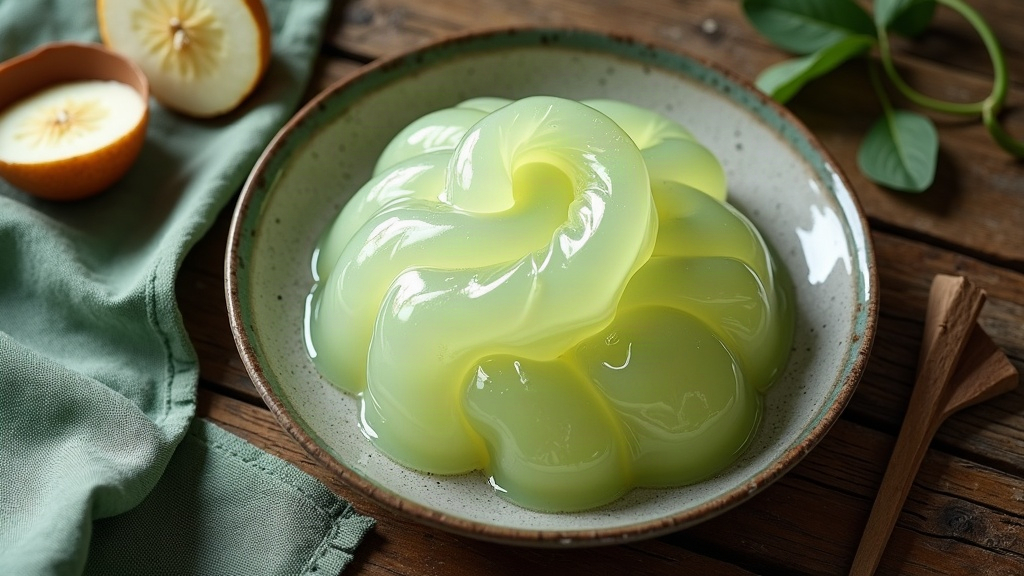
From collagen structure to satiety cues, gelatin has resurfaced repeatedly in discussions about women’s changing bodies — not as a fix, but as a habit rooted in tradition and nutrition worth understanding.
Long before wellness trends had names, women were already noticing gradual shifts — in skin, in appetite, in how the body held weight. Four of these shifts explain why so many conversations now circle back to something as unassuming as gelatin.
The body's natural collagen production begins tapering gradually over the years, a shift that shows up long before most women think to connect it to diet. It's one of the reasons gelatin, a collagen-derived protein, keeps entering the conversation.
The hormonal signals that tell the brain 'you've had enough' don't stay static. Many women describe feeling less satisfied by meals that once felt sufficient, a pattern tied to shifting appetite-regulating hormones rather than willpower.
Muscle tissue and fat distribution shift gradually across a woman's life, influenced by hormones, activity levels, and protein intake — a slower and more layered process than most calorie-counting advice accounts for.
Most mainstream diet frameworks were modeled on generic caloric math, not on the specific ways female physiology changes. That mismatch is part of why so many women feel like standard advice stops working.
Few topics collect as much folklore as female metabolism. Separating repeated claims from what’s actually documented is a useful first step before adopting any new habit.
A woman’s metabolism ‘shuts down’ at a certain birthday.
Metabolic rate shifts gradually across decades and is shaped by muscle mass, hormones, sleep, and activity — not a single cutoff age.
Cutting calories aggressively is the only lever for body composition.
Body composition also reflects protein quality, movement patterns, and recovery. Severe restriction alone often works against lean mass rather than for it.
All dietary proteins support the body in the same way.
Amino acid profiles differ meaningfully between protein sources. Collagen-derived proteins like gelatin offer a distinct amino acid composition compared to typical muscle-meat protein.
None of this requires an overhaul. The women who stick with a new habit longest tend to follow a similar, unhurried sequence.
Before adding anything, take honest stock of current meals, snacking cues, and energy dips throughout the day. This baseline makes it easier to notice what actually changes later.
Rather than restructuring an entire diet, many women start by folding a gelatin-based preparation — like a warm broth or homemade gummy — into an existing meal or routine.
Habits compound slowly. Missing a day isn’t a failure; what matters is returning to the routine often enough that it becomes an unremarkable part of the week.
Gelatin isn’t a modern invention dressed up in new packaging. Bone broths, slow-simmered stocks, and gelatin-set dishes have appeared across culinary traditions for generations, long before ‘collagen’ became a label on a jar. Grandmothers who simmered bones for hours weren’t chasing a trend; they were using what was available, understanding — through repetition rather than research papers — that these preparations behaved differently in the body than a quick cut of meat. Modern interest in hydrolyzed collagen and gelatin supplements is, in many ways, a rediscovery of a kitchen habit that industrial food processing pushed to the margins.
The connection between traditional bone-based cooking and today’s collagen conversation isn’t coincidental — it’s the same ingredient, rediscovered through a different lens.
Meals that once felt sufficient may leave room for lingering hunger, a pattern often tied to shifting satiety hormones rather than portion size.
Reduced elasticity and slower-to-bounce-back skin are frequently reported alongside the natural decline in the body's collagen output.
Morning stiffness or joint awareness after inactivity is a commonly described change, often linked to connective tissue composition.
Some women notice weight settling in new areas even without major changes to diet or activity — a reflection of shifting lean-to-fat ratios.
A predictable afternoon slump, more pronounced than before, is often mentioned alongside other gradual physiological shifts.
Brittle or slow-growing nails are frequently brought up in the same breath as skin and joint changes, all connective-tissue related.
These are individual accounts shared for illustrative purposes. Names have been changed. Individual results may vary, and these testimonials are not a guarantee of any specific outcome.
Hydrolyzed gelatin is gelatin that has been broken down into smaller protein fragments, making it easier to dissolve and mix into foods and drinks while retaining its amino acid profile.
Gelatin is derived from collagen through a cooking process. They share a similar amino acid foundation, but gelatin has a different texture and solubility than raw collagen.
No. This content is educational and explores traditional habits and general nutrition concepts. It does not diagnose, treat, cure, or prevent any condition.
No. Most women described in this content started by adding a single small habit rather than overhauling an entire eating pattern.
Because hormonal and physiological changes across a woman’s life directly influence satiety, lean mass, and connective tissue — all relevant to how gelatin fits into a routine.
Individual needs vary. Anyone with dietary restrictions, allergies, or existing health conditions should consult a healthcare professional before changing their routine.
Bone-based broths and gelatin preparations appear across many culinary traditions worldwide, long predating modern collagen supplements.
Watch the full explanation to understand the reasoning, the tradition, and the simple habit behind the conversation everyone keeps referencing.
Advertising Disclosure: This page contains sponsored content and affiliate links. We may receive compensation if you engage with links or offers presented on this page. This compensation does not influence the educational information provided.
Content Disclaimer: The content on this page is provided for educational and informational purposes only. It has not been evaluated by the FDA. Nothing on this page is intended to diagnose, treat, cure, or prevent any disease or medical condition. Always consult a qualified healthcare professional before making changes to your diet, supplement routine, or lifestyle.
Results Disclaimer: Individual results may vary. Testimonials and accounts shared on this page reflect personal experiences and are not a guarantee of any specific outcome for any individual.
© 2026 africacodeacademyusa.com · All Rights Reserved · /contact/